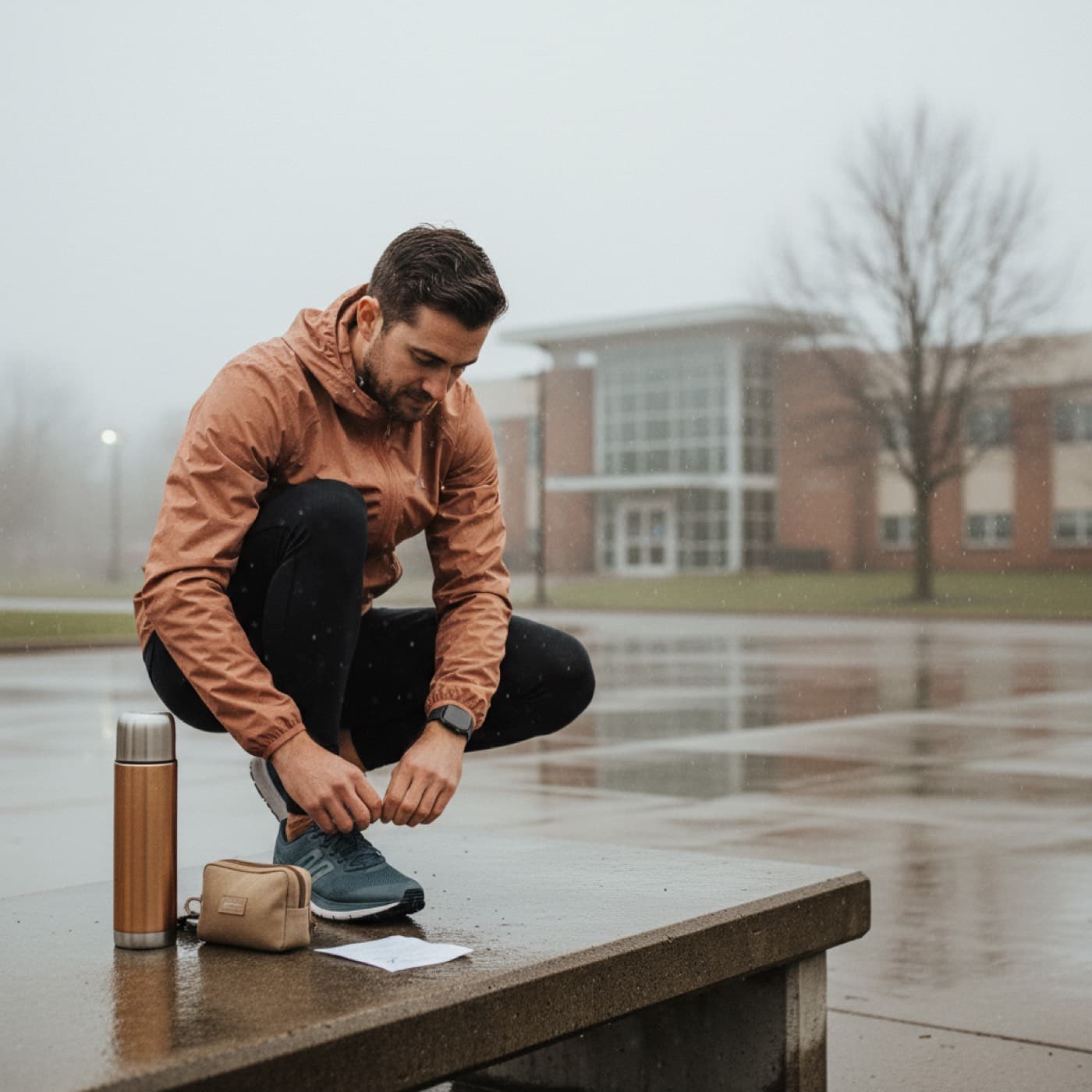
Return to Training After Flu: Apple Watch Signals for Safety
Learn how to return to training after flu using Apple Watch HRV, resting heart rate, sleep, and readiness trends to avoid relapse and rebuild safely.
Written by Leo Cardoso
Feeling "almost normal" after flu is not the same as being ready for full load.
A controlled return reduces relapse risk and helps you rebuild performance faster. This guide gives you a practical framework using Apple Watch signals and session feel.
Returning to training after influenza requires a structured approach because performance decline can last 2-4 weeks after symptoms resolve, and HRV often stays suppressed well beyond the point where you feel better. A case study published in PMC tracked an elite endurance athlete through viral infection and found that HRV monitoring provided the clearest real-time signal for guiding daily training decisions during recovery (PMC8446376). Apple Watch gives you this same signal layer on your wrist every morning.
Why post-flu training decisions go wrong
Continue reading
Most mistakes happen in one of two directions: restarting too hard because fever is gone, or stopping all movement too long and losing rhythm.
A better approach is progressive exposure based on daily recovery data. The immune system, cardiovascular system, and musculoskeletal system don't all recover at the same rate. What feels like full recovery from a symptom perspective can still leave significant physiological debt.
The 5 readiness checks before each session
1. Morning resting heart rate
If resting HR stays clearly above your normal trend, your system may still be under stress. Even a 3-5 bpm elevation from baseline warrants a conservative session.
For baselines, see resting heart rate by age on Apple Watch.
2. HRV trend
HRV often stays suppressed for several days after symptoms improve. A 2021 case report in Frontiers in Sports and Active Living found that HRV decreased during viral infection in an elite athlete, with recovery trends only becoming reliable several days after clinical symptoms resolved (PMC8446376). Look at trend direction, not one value.
For context, use HRV by age on Apple Watch.
3. Sleep quality and duration
Poor sleep after illness usually means delayed recovery, even when daytime energy feels okay. The immune system does much of its repair work during deep sleep, so fragmented or short sleep nights extend the recovery timeline.
4. Symptom audit
No chest symptoms, no fever, no unusual shortness of breath with easy movement. Any of these means a full rest day, not a reduced session.
5. Session feel
If easy pace feels hard, treat that as a yellow or red signal. Your cardiovascular system may still be dealing with residual inflammation even when your legs feel fine.
7-day return protocol after flu
Days 1-2: reactivation only
20-40 minutes of easy movement. Keep intensity conversational. Stop if symptoms return. The goal is to test tolerance, not build fitness.
This phase matters even if you feel great. The immune-cardiovascular connection means that training too hard too soon can trigger a relapse, particularly with respiratory illnesses.
Days 3-4: low load progression
Increase volume slightly if morning signals improve. Add short strides or low neuromuscular work only if green signals stack. No high-intensity blocks.
Goal: rebuild rhythm without immune overload. The body is still allocating resources to repair, and competing demands between immune function and training adaptation can set both back.
Days 5-7: controlled return to structure
Resume one moderate quality session if trends are stable across at least two consecutive days. Keep one extra recovery day between demanding sessions. Drop load 10-20% if two warning signals appear together.
Goal: return with durability, not urgency.
Return to training: signal-based decision table
| Scenario | Resting HR | HRV trend | Sleep | Action |
|---|---|---|---|---|
| Clear green | At or near baseline | Trending up | Stable | Planned session as written |
| Mild yellow | 2-4 bpm elevated | Flat, not falling | Minor disruption | Reduce intensity 15-25%, keep duration |
| Strong yellow | 4-6 bpm elevated | Slightly suppressed | Fragmented | Easy movement only, no structure |
| Red | 6+ bpm elevated | Clearly suppressed | Poor, multiple nights | Rest or very gentle movement only |
| Red + symptoms | Any elevation | Suppressed | Poor | Full rest, consult a doctor if chest symptoms |
Want to check your own recovery trend from your Apple Watch? Vita tracks all of these signals automatically. Download free.
Green, yellow, red decision model
Green
HRV is recovering toward baseline, resting HR is near normal, sleep is improving, and symptoms are resolved. Take your planned easy or moderate session.
Yellow
One metric is still off trend, or you have mild residual fatigue. Keep the session but reduce intensity or volume by 15-25%.
Red
HRV is suppressed and resting HR is elevated, sleep has been poor for multiple nights, or symptoms return with effort. Active recovery only and reassess next morning.
The cardiovascular risk window
One area that deserves specific mention: flu and other respiratory infections carry a small but real cardiovascular risk window in the days immediately following illness. This is well-documented in the medical literature, with acute respiratory infections identified as triggers for cardiac events, particularly in older adults and those with existing cardiovascular risk factors.
This doesn't mean you need medical clearance before jogging. It does mean that chest tightness, unusual shortness of breath, or heart palpitations during or after easy movement should be taken seriously, especially in the first 5-7 days after illness. If any of these appear, skip the session and speak with a physician before resuming training.
Nutrition and hydration during post-flu return
One area athletes often overlook: the body uses significantly more resources for immune function during and after illness. This competes with training recovery when you restart.
Practical nutritional priorities during the return phase:
- Don't under-eat. Caloric restriction while restarting training delays both immune recovery and muscular adaptation.
- Prioritize protein at each meal. Aiming for 0.7-1g per pound of body weight supports both tissue repair and immune function.
- Increase carbohydrate availability on session days. The immune system relies heavily on glucose, and training adds additional demand.
- Stay well-hydrated. Dehydration amplifies the cardiovascular stress of exercise and slows recovery.
Illness often suppresses appetite, meaning many athletes enter their return phase already in a mild caloric deficit. This isn't the time to maintain aggressive nutritional restriction. Adequate fueling is part of the return protocol, not a separate consideration.
Weekly checklist
- Track morning HRV and resting HR daily.
- Keep all sessions submaximal for at least 4-5 days.
- Avoid back-to-back hard days in week one.
- Prioritize hydration and regular meal timing.
- Sleep window: same bedtime and wake time all week.
- Recheck tolerance before each progression step.
Common relapse mistakes
- Using motivation instead of physiology to set load.
- Testing max effort too early.
- Ignoring sleep disruption after symptoms fade.
- Returning to pre-illness weekly volume immediately.
- Treating one good day as full recovery.
- Skipping the signal check on mornings when you feel fine.
FAQ
How long should I wait after flu before hard workouts?
It depends on trend recovery. Most people benefit from at least 4-5 low-load days before quality sessions, and often longer after more severe cases. HRV trend direction is a better guide than a fixed number of days.
Is normal resting HR enough to resume full training?
No. Resting HR normalizing is one good signal, but confirm with HRV trend, sleep quality, and session feel before returning to full intensity. These signals together are more reliable than any one of them alone.
What if HRV is still low but I feel good?
Proceed conservatively. Use a reduced session and recheck next morning. Subjective feel often leads recovery by 24-48 hours, meaning you can feel better before your physiology has actually caught up.
Should I stop training completely after flu?
Not always. Easy movement can support recovery if symptoms are resolved and response is stable. Complete inactivity for healthy athletes is rarely the optimal strategy. The goal is controlled loading, not zero loading.
How is post-flu recovery different from normal fatigue?
Normal training fatigue responds to 1-2 rest days. Post-flu recovery involves immune system repair, sometimes sub-clinical inflammation, and cardiovascular demand that doesn't show up in soreness or perceived effort. That's why data signals matter more than subjective feel during this period.
Next step
Use Vita to track daily readiness, HRV, resting HR, and recovery direction in one view. Take the Overtraining Quiz if fatigue keeps bouncing back. And if you're managing your training load ratio during the return, this training load ratio guide for Apple Watch helps you build back without spiking risk.
Track your daily readiness with Vita
Get practical recovery context from your Apple Watch data and stop guessing if you should push or recover.
Download on the App StoreRelated posts

March 14, 2026
Sleeping Heart Rate Apple Watch: What's Normal?
Sleeping heart rate Apple Watch guide: learn what's normal at night, what raises it, and when a change in your overnight trend deserves rest or follow-up.
Read article
March 13, 2026
Body Battery Apple Watch: What to Use Instead
Body Battery Apple Watch isn't a native Apple metric. Learn which Apple Watch signals replace it, how to read them, and how Vita turns them into one score.
Read article
March 08, 2026
Apple Watch vs WHOOP vs Oura: Which One Fits You?
Apple Watch vs WHOOP vs Oura explained for recovery, sleep, HRV, comfort, and long-term cost. Pick the tracker that matches your training style and goals.
Read article