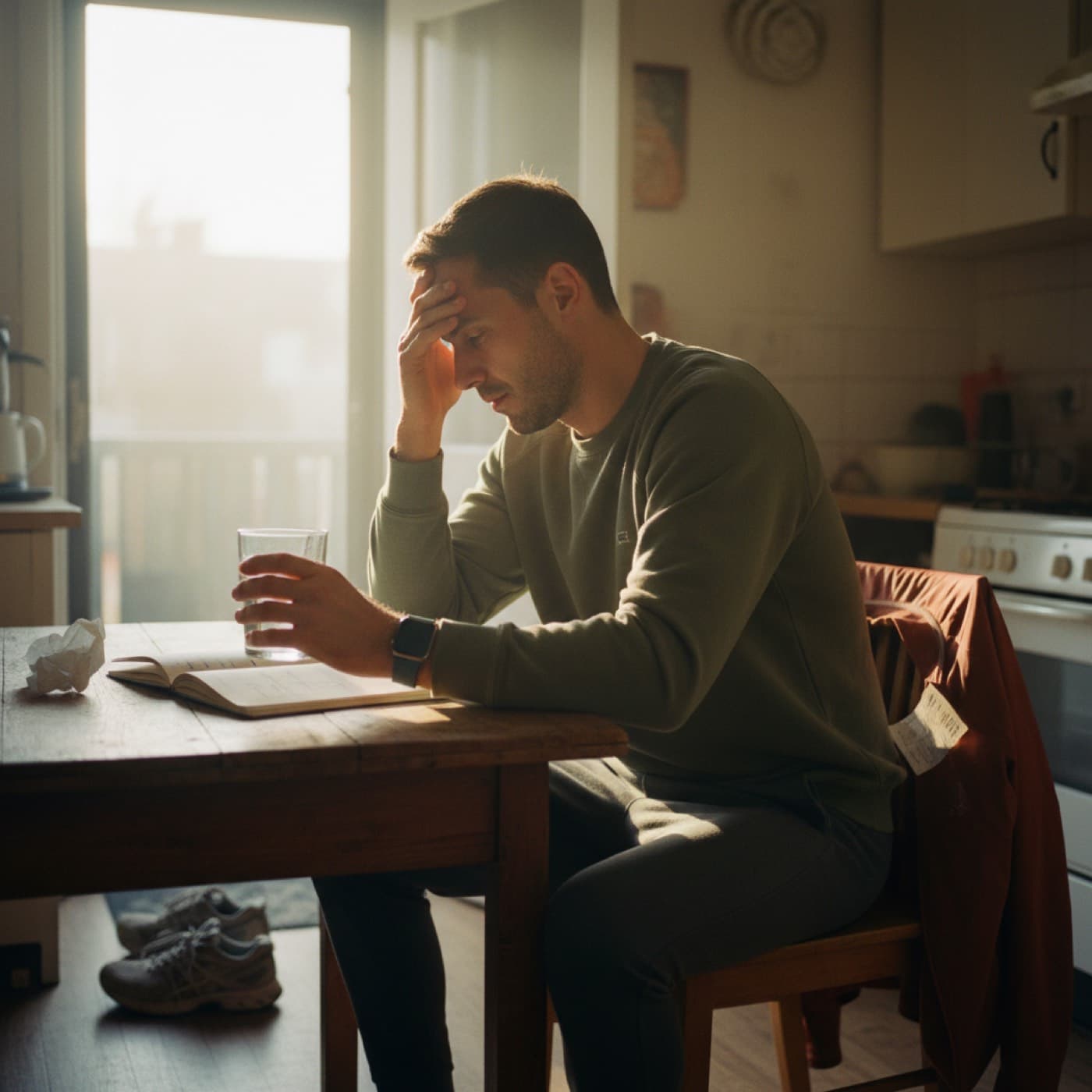
Alcohol and HRV on Apple Watch: Next-Day Readiness Guide
Alcohol lowers HRV and raises resting heart rate on Apple Watch. Learn what changes in 24-72 hours and how to adjust your training with a clear protocol.
Written by Leo Cardoso
If your Apple Watch shows lower HRV and higher resting heart rate after drinking, that pattern is common. The key is deciding what to do next without overcorrecting.
This guide explains what usually changes in the next 24-72 hours and how to adjust training with practical rules.
Alcohol disrupts autonomic nervous system balance during sleep, suppressing HRV and elevating resting heart rate even when total sleep duration looks normal. The effect is dose-dependent: larger intake causes greater HRV suppression, deeper sleep architecture fragmentation, and longer recovery timelines. Understanding this pattern lets you make training decisions based on data, not guilt.
What the research says
Continue reading
A large observational study published in JMIR (2018) tracked over 4,000 employees and found that alcohol intake was dose-dependently associated with increased sympathetic activity, decreased HRV, and insufficient recovery during sleep, even at low and moderate doses. The effect appeared in the first hours of sleep and persisted throughout the night.
A separate laboratory study in Sleep Medicine Reviews (2021) confirmed that evening alcohol consumption suppressed HRV and disrupted sleep architecture in a dose-response pattern across both men and women.
What usually changes after alcohol
Many people see a short-term shift in recovery signals:
- HRV trend decreases.
- Resting heart rate increases.
- Sleep quality and sleep continuity worsen.
- Perceived fatigue rises the next morning.
The magnitude depends on timing, amount, hydration, meal context, and your personal sensitivity.
Why alcohol affects readiness signals
Alcohol can affect autonomic balance, sleep architecture, and overnight recovery. Even when total sleep duration looks acceptable, sleep quality may be poorer.
That is why a "normal hours slept" night can still produce weaker HRV and higher resting heart rate the next day.
How to decide training the next morning
Use a simple 3-color framework with multiple signals.
| Signal status | HRV | Resting heart rate | Subjective energy | Action |
|---|---|---|---|---|
| Green | Near baseline | Stable | Acceptable | Train as planned |
| Yellow | Down 8-12% | Mildly elevated | Moderate fatigue | Reduce volume/intensity 10-20% |
| Red | Down 10-20%+ | Elevated 2+ mornings | Poor sleep + clear fatigue | Low-intensity only 24-48h |
Green (train as planned)
- HRV near baseline.
- Resting heart rate stable.
- Sleep and subjective energy acceptable.
Action: proceed with planned session.
Yellow (modify load)
- One warning signal (for example HRV down 8-12%).
- Mild resting heart rate elevation.
- Moderate fatigue.
Action: keep training but reduce intensity or volume by 10-20%.
Red (recovery focus)
- HRV clearly suppressed (about 10-20% below baseline).
- Resting heart rate elevated for 2+ mornings.
- Poor sleep and clear fatigue.
Action: low-intensity movement only for 24-48 hours.
Want to check your own readiness after a social night? Vita tracks HRV, resting heart rate, and readiness automatically from your Apple Watch. Download free.
24-72 hour recovery protocol after drinking
First 24 hours
- Prioritize hydration early in the day.
- Keep training easy or moderate.
- Eat balanced meals with adequate carbohydrates and protein.
- Avoid stacking additional stressors.
24-48 hours
- Recheck HRV and resting heart rate trends.
- If one marker improves, reintroduce moderate quality.
- If both remain unfavorable, keep load reduced.
48-72 hours
- Return to planned intensity only when at least two signals recover (objective and subjective).
- If suppression persists, deload another day and reassess.
How alcohol volume affects recovery timeline
Not all drinking affects recovery equally. The amount and timing both matter.
| Intake level | Typical HRV drop | Resting heart rate elevation | Recovery timeline |
|---|---|---|---|
| 1-2 standard drinks | 3-8% | Mild (1-3 bpm) | Often recovered within 24h |
| 3-4 standard drinks | 8-15% | Moderate (3-6 bpm) | 24-48h |
| 5+ standard drinks | 15-25%+ | Marked (5-10+ bpm) | 48-72h or more |
These are general patterns. Individual sensitivity varies considerably, and some people see larger effects from smaller amounts.
Weekly checklist (next 7 days)
- Compare HRV against your 7-day baseline, not a single value.
- Pair HRV with resting heart rate every morning.
- Treat poor sleep plus elevated resting heart rate as a stronger warning.
- Keep at least one full recovery day after high social/behavioral stress.
- Don't "punish train" the day after drinking.
- Rebuild sleep consistency within 48 hours.
How alcohol affects your Vital Score and broader readiness
Beyond single-session impact, regular alcohol consumption across a week often shows up as a declining Vital Score trend. The reason is cumulative: each night of disrupted sleep adds to your recovery debt, and the HRV suppression compounds across days.
If you also notice your HRV running lower than your age-typical baseline even on sober nights, see the full guide on HRV by age on Apple Watch to understand whether lifestyle or other factors are driving the pattern.
Common mistakes
- Assuming one poor reading means all progress is lost.
- Doing a very hard workout to "sweat it out."
- Ignoring hydration and meal timing.
- Returning to full intensity before signals recover.
- Comparing your response to someone else's tolerance.
FAQ
Does alcohol always lower HRV on Apple Watch?
Not always, but most people see a temporary drop in HRV trend and a rise in resting heart rate. Sensitivity varies by individual. Your own trend data tells you more than general rules.
Can I still train after drinking?
Usually yes, but intensity should match your readiness signals. Easy training is often appropriate when markers are negative. A hard session when you're already suppressed extends recovery time.
How long does it take for HRV to recover after drinking?
For many people, signals improve within 24-72 hours depending on dose, sleep quality, and individual recovery habits. One to two nights of quality sleep usually restores baseline.
Is one drink enough to affect Apple Watch readiness?
For some people, yes. Sensitivity varies, so your trend data is more useful than generic rules. If you regularly see HRV dips after even one drink, your body is telling you something specific.
What if my Apple Watch metrics look normal but I feel tired?
Subjective fatigue still matters. Choose a conservative session and reassess the next day. Your data and your perception together give the most reliable signal.
Next step
Take the Overtraining Quiz to understand your current fatigue risk, then monitor HRV, resting heart rate, and daily readiness in Vita to adapt training after social nights without guesswork.
Track your daily readiness with Vita
Get practical recovery context from your Apple Watch data and stop guessing if you should push or recover.
Download on the App StoreRelated posts

March 14, 2026
Sleeping Heart Rate Apple Watch: What's Normal?
Sleeping heart rate Apple Watch guide: learn what's normal at night, what raises it, and when a change in your overnight trend deserves rest or follow-up.
Read article
March 13, 2026
Body Battery Apple Watch: What to Use Instead
Body Battery Apple Watch isn't a native Apple metric. Learn which Apple Watch signals replace it, how to read them, and how Vita turns them into one score.
Read article
March 08, 2026
Apple Watch vs WHOOP vs Oura: Which One Fits You?
Apple Watch vs WHOOP vs Oura explained for recovery, sleep, HRV, comfort, and long-term cost. Pick the tracker that matches your training style and goals.
Read article