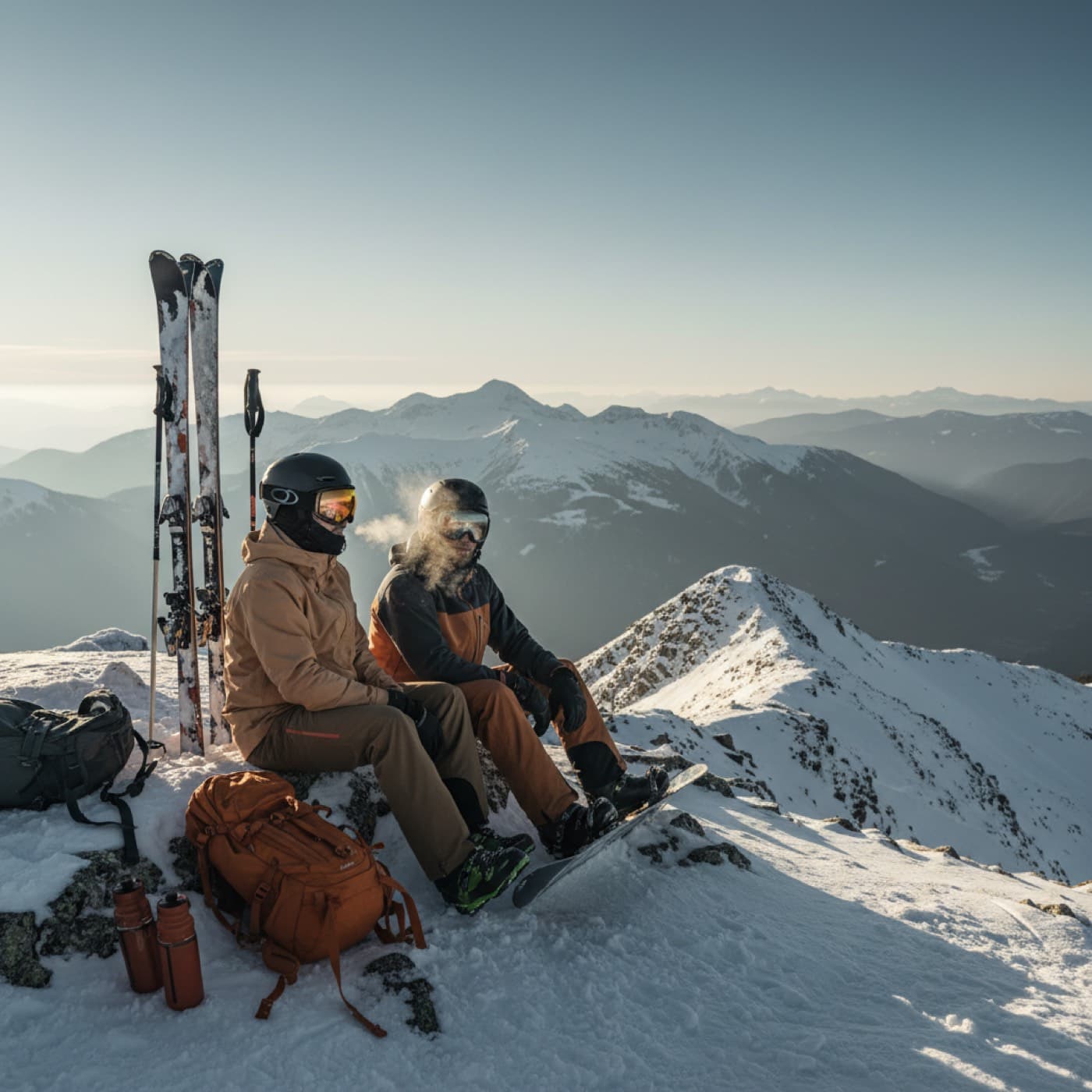
Snow Sports Training: Ski and Snowboard Readiness
Snow sports training with Apple Watch metrics, a 7-day slope checklist, and recovery targets so your ski and snowboard days feel strong and controlled.
Written by Vita Team
Snow sports training is different from summer training. Cold, altitude, long descents, and repeated impact change how fast fatigue builds. If you show up with only general gym fitness, your legs and focus can drop by lunch on day one.
You can avoid that pattern with a short plan and simple daily checks. Apple Watch trends help you decide when to push and when to back off, so your week on snow stays fun and consistent.
Snow sports training means preparing your body for repeated eccentric leg load, core stability, balance, and altitude stress before your ski or snowboard days begin. The goal is not peak race fitness. The goal is stable performance and lower injury risk across multiple days, using simple readiness trends like resting heart rate, HRV, sleep consistency, and perceived effort.
Why snow sports training needs a different plan
Continue reading
Skiing and snowboarding combine high force and technical control. Your quadriceps and glutes absorb force while braking, turning, and stabilizing on uneven snow. Most of that work is eccentric, which creates more soreness than concentric-only sessions.
The environment adds stress. Cold air can dry your airways. Altitude can raise heart rate and sleep disruption during the first days. Travel, rental setup, and long standing hours also increase total load.
If you usually train in flat urban settings, your first mountain day can feel like two workouts plus a long hike. That mismatch is why people feel good in the first runs, then suddenly lose edge control later in the day.
A practical fix is to train for repeatability, not hero efforts. Build leg endurance, trunk control, and movement quality for 4 weeks before the trip. Then use wearable trend data to adjust daily volume once you are on snow.
Research supports this risk-first approach. A PubMed evidence review on recreational skiers and snowboarders found helmets reduce both incidence and severity of head injury, and did not increase neck injury risk (Ruedl et al.). Conditioning, protective gear, and pacing work best together, not in isolation.
Ski vs snowboard demands, what to train first
Both sports need lower-body endurance and core stiffness, but movement patterns differ. Skiers spend more time in repeated bilateral turning and deceleration. Snowboarders spend more time in asymmetrical stance control, hip rotation control, and fall pattern management.
| Demand | Ski focus | Snowboard focus | What to train |
|---|---|---|---|
| Leg fatigue profile | Repeated quad braking in turns | Front and rear leg asymmetry | Split squats, tempo squats, wall sits |
| Trunk control | Rotational stability at speed | Anti-rotation in fixed stance | Pallof press, dead bug, side plank |
| Balance demand | Edge-to-edge transitions | Toe/heel edge control | Single-leg RDL, lateral hops |
| Typical late-day issue | Heavy legs and slower reaction | Hip and low-back fatigue | Aerobic base + trunk endurance |
| Common early mistake | Starting too hard on day one | Riding fatigued after falls | Run caps and structured breaks |
This table is useful for trip planning. If your weak link is quad endurance, your best return comes from controlled eccentric leg work. If your weak link is balance and torso control, your best return comes from anti-rotation drills and single-leg work.
If you train hybrid, you can connect this with your existing framework from overtraining in hybrid athletes. The principle is the same, avoid stacking too much intensity while recovery signals are negative.
4-week snow sports training block
You do not need a complex periodized calendar. A simple 4-week structure works for most recreational athletes.
Week 1, establish movement quality
Train 3 days.
- Session A: Goblet squat, reverse lunge, calf raise, side plank.
- Session B: Step-downs, Romanian deadlift, Pallof press, dead bug.
- Session C: Brisk Zone 2 cardio 35 to 45 minutes.
Keep load moderate. Focus on control and full range. Leave 2 to 3 reps in reserve on strength sets.
Week 2, add eccentric tolerance
Train 3 to 4 days.
- Add slow lowering phases (3 to 4 seconds) on squats and split squats.
- Add lateral movement, skater bounds with controlled landing.
- Add one longer Zone 2 session, 45 to 60 minutes.
Your goal is to handle soreness without losing movement quality.
Week 3, build repeatability
Train 4 days.
- Two lower-body strength sessions.
- One trunk and balance session.
- One conditioning session with intervals like 6 x 2 minutes hard, 2 minutes easy.
Hard intervals should feel controlled, not maximal. You should finish with one more repeat possible.
Week 4, taper into travel
Train 2 to 3 days with 30 to 40% lower volume.
- Keep light strength and mobility.
- Keep one short conditioning session.
- Prioritize sleep and hydration.
This week is where many people fail. They panic-train before the trip and arrive fatigued. A slight reduction helps you start fresh.
Want a single daily signal before the trip starts? Vita reads Apple Watch trends and shows a practical readiness score. Download free.
Apple Watch metrics that matter before and during your trip
Use trends over 3 to 7 days. A single bad night is noise.
1. Resting heart rate trend
If resting heart rate sits above baseline for 3 consecutive mornings, reduce training volume that day. Keep technique work and easy cardio.
For baseline context, see resting heart rate by age on Apple Watch.
2. HRV direction
You do not need a perfect number. You need direction. A sustained drop with rising fatigue usually means your recovery budget is tight.
Use this with your own reference from HRV by age with Apple Watch.
3. Sleep consistency
Snow trips usually break sleep schedule. Late dinners, altitude, and social plans can push bedtime later. If sleep timing shifts each night, fatigue accumulates fast by day three.
4. Subjective effort on warm-up runs
During your first two warm-up runs, ask one question, does this feel easier, equal, or harder than expected. If it feels harder and your metrics are negative, cap total runs early.
7-day checklist for your week on snow
Use this structure during your ski or snowboard week.
- Day 1: Keep volume at 70% of what you think you can do.
- Day 2: Increase to 80 to 90% only if morning trends are stable.
- Day 3: Keep technique day, lower speed, longer rests.
- Day 4: Recovery day, easy mobility walk, hydration focus.
- Day 5: Highest quality day if metrics are green.
- Day 6: Cap late-day runs to protect knees and reaction speed.
- Day 7: Keep fun runs, avoid heavy fatigue chasing.
This gives you better total week output than going all-out on day one and surviving the rest.
Fueling and hydration in cold weather
People often drink less in cold weather even while sweating inside insulated gear. Mild dehydration raises perceived effort and can worsen altitude headaches.
Use a simple rule:
- Drink before the first lift, not only at lunch.
- Include sodium in one bottle or meal during the day.
- Eat carbohydrate every 2 to 3 hours while on snow.
For adults, general activity guidance from the CDC still applies as a baseline for weekly health volume (CDC Physical Activity Basics). Your snow week can exceed that load quickly, so fueling needs to match output.
Most common mistakes that ruin snow week performance
Going hard too early
Adrenaline hides fatigue. Your first morning can feel amazing, then control drops sharply after lunch. Set run caps early.
Ignoring small warning signs
If your legs feel shaky on easy terrain, do not force a black run to prove fitness. Technique quality matters more than ego.
Treating soreness as weakness
Some soreness is normal. Progressive stiffness plus slower reaction is a warning. Take a longer break before form degrades.
Skipping protection basics
Helmet use, warm-up runs, and terrain choice are part of performance. You cannot separate safety from output quality.
When to stop and reset
Stop for the day if two or more signals show up together:
- Rising resting heart rate trend for multiple mornings
- HRV trend stays below your normal band
- Warm-up runs feel much harder than normal
- Slower reaction time in simple turns
- Repeated balance errors on familiar terrain
A one-day reset can save the rest of the week.
If you want a simple way to track this pattern without spreadsheets, Vita turns Apple Watch data into a daily recovery decision.
FAQ
How do I train for skiing and snowboarding in 4 weeks?
Start with 3 to 4 sessions per week focused on leg endurance, trunk stability, balance, and easy aerobic work. Keep week 4 lighter so you arrive fresh.
If your training time is limited, prioritize split squats, tempo squats, side planks, and Zone 2 cardio. Those four pieces cover most of what recreational snow athletes need.
What Apple Watch metrics are best for snow sports readiness?
Resting heart rate trend, HRV direction, sleep consistency, and subjective effort on warm-up runs are the most useful. Look at multi-day patterns, not one isolated reading.
When two or more trends are negative for several days, reduce run volume and focus on technique. You usually recover faster and ski better later in the week.
Is snowboarding harder on the body than skiing?
Both can be demanding, but stress patterns differ. Skiing often drives higher repeated quad braking, while snowboarding often drives more asymmetrical hip and trunk fatigue.
The better question is where your weak link sits, leg endurance, balance, or trunk control. Train that first and your performance improves in either sport.
How can I avoid injuries on a ski trip?
Use a layered approach, train before travel, ramp volume gradually, wear a proper helmet, and stop when fatigue affects control. That mix works better than any single tactic.
Evidence reviews show helmets reduce head injury severity in skiers and snowboarders. Pair that with better pacing and your risk drops further.
Should I take a full rest day during a snow week?
Yes, most recreational athletes perform better with one planned lower-load day around day 4. It lowers accumulated fatigue and improves run quality in the second half of the trip.
A short reset is not lost progress. It is what keeps the next days strong.
Track your daily readiness with Vita
Get practical recovery context from your Apple Watch data and stop guessing if you should push or recover.
Download on the App StoreRelated posts

March 13, 2026
Body Battery Apple Watch: What to Use Instead
Body Battery Apple Watch isn't a native Apple metric. Learn which Apple Watch signals replace it, how to read them, and how Vita turns them into one score.
Read article
February 20, 2026
Using Runna for Training and Vita for Recovery (Weekly System)
Run your plan in Runna and manage recovery with Vita. A simple weekly system to adjust intensity, avoid fatigue spirals, and stay consistent before race day.
Read article
September 13, 2026
Apple Watch Readiness: Which Models Support It
Apple Watch Readiness runs only on Series 12 and Ultra 4. Check every model in one table and see how to get a daily readiness score on an older watch.
Read article